
2026 Winner
SilverCreative Catalyst
SilverEvolution Strategy: Keeping it Fresh
Sleep Country
"Sleep Daddy"
Publicis
"Sleep Daddy"
Publicis
CASE SUMMARY
As Canada’s most trusted specialty sleep retailer, Sleep Country had spent years demonstrating the power of sleep through problem/solution messaging grounded in the brand’s deep knowledge and expertise. But despite reinforcing that sleep matters, Canadians’ disregard for better sleep wasn’t changing and the category was stagnating.The breakthrough came from realizing Sleep Country had been focusing on the wrong problem entirely. The brand was leaning towards issues that occurred during sleep – tossing and turning, overheating, lack of support-outcome of poor sleep the consumers struggled to directly attribute to their beds, rather than the behaviours that lead to them. As a result, action in improving sleep and investing in a bed was easily put on the back burner.
By moving from invisible symptoms to highly visible behaviours, strategy created a renewed role for the brand at the exact moment poor sleep decisions were being made. This opened the door to a fundamentally different kind of creative expression: one that could interrupt, confront, and hold consumers accountable for neglecting their sleep.
Sleep Country’s Get Serious About Sleep platform emerged directly from this shift: an unapologetic call for accountability that challenged Canadians in the moments they were choosing to sacrifice their slumber.
The focus was largely on issues that occurred while people were sleeping, meaning creative constantly showcased problems that were inherently passive. People knew they were waking up tired or with a kink in their neck, but they struggled to link those issues directly to their beds (thinking “maybe I slept funny” excuses the need for a new pillow or mattress). Creative work dramatized outcomes, proposing a linear transition from discomfort to feeling good, but it limited Sleep Country to functional, uninspired messaging that was falling flat with audiences.
Turn Sleep Country into an unapologetic voice that confronts bad bedtime behaviour and makes better sleep an urgent decision, spurring audiences into actively improving their sleep.
By redefining the problem as an active choice that happens before sleep — not a passive accident that happens during it – strategy transformed the brand’s role into one that was more visible, immediate, and difficult to ignore.
Rather than educating consumers about sleep, the brand could challenge them and call out the habits
they knowingly engage in that disrupt their sleep.
Instead of depicting the consequences of poor sleep, the brand could now step into the moment those
decisions were being made and proactively interrupted that behaviour.
The brand could elevate their sleep expertise into the role of enforcer of better sleep. This shift allowed Sleep Country The brand could elevate their sleep expertise into the role of enforcer of better sleep. This shift allowed Sleep Country to be the voice that gently holds consumers accountable for their choices and invites them to correct their actions.
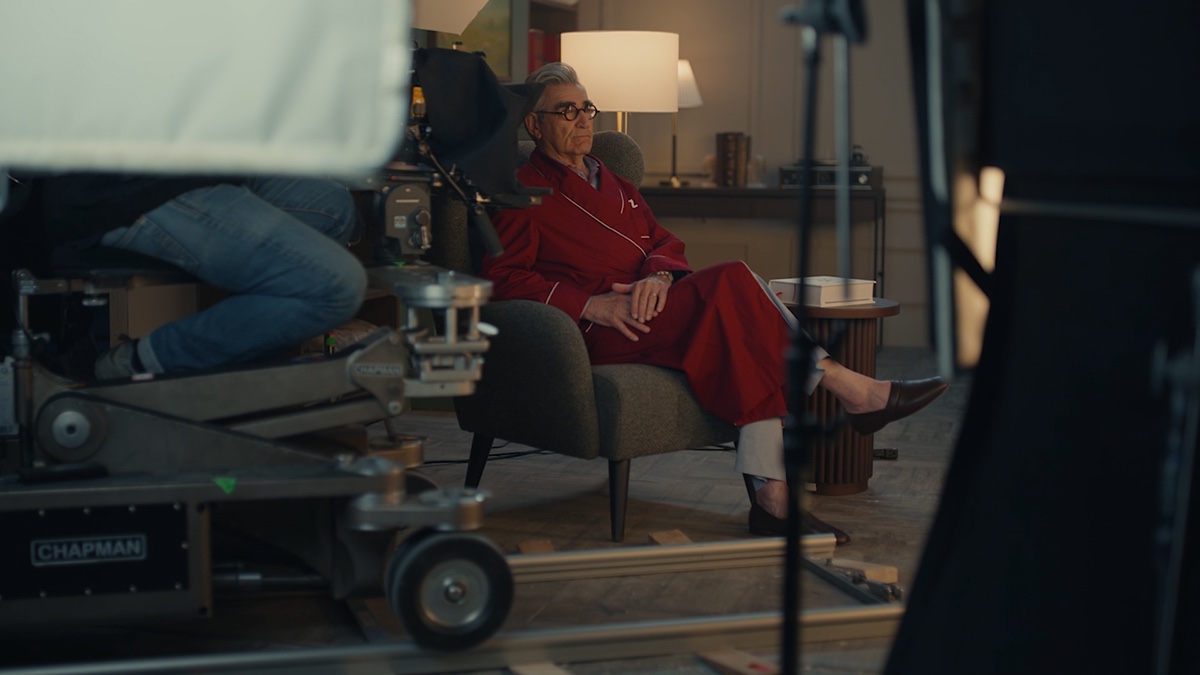
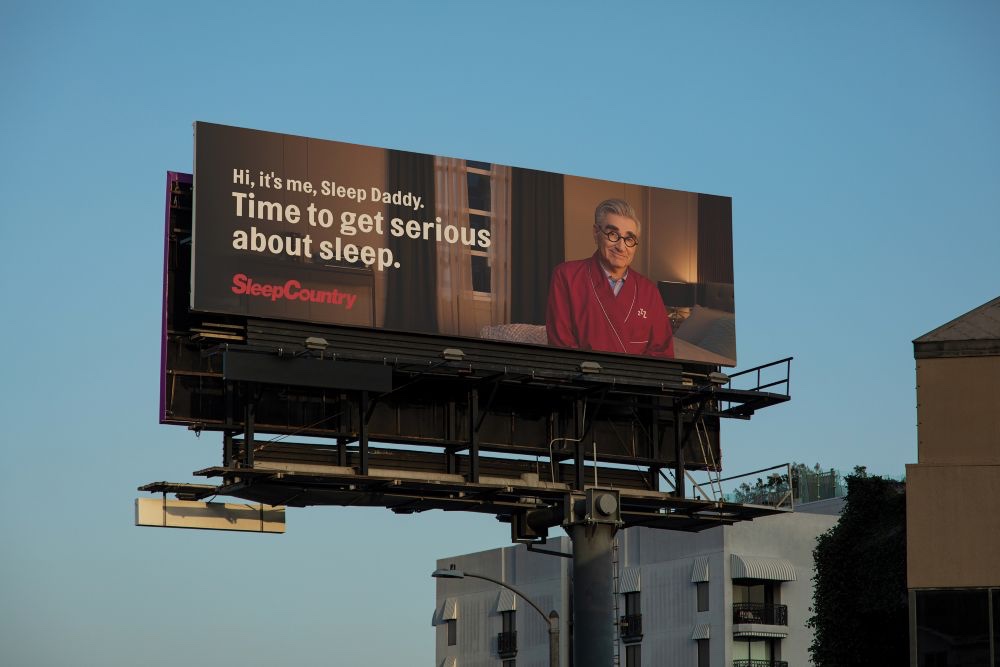
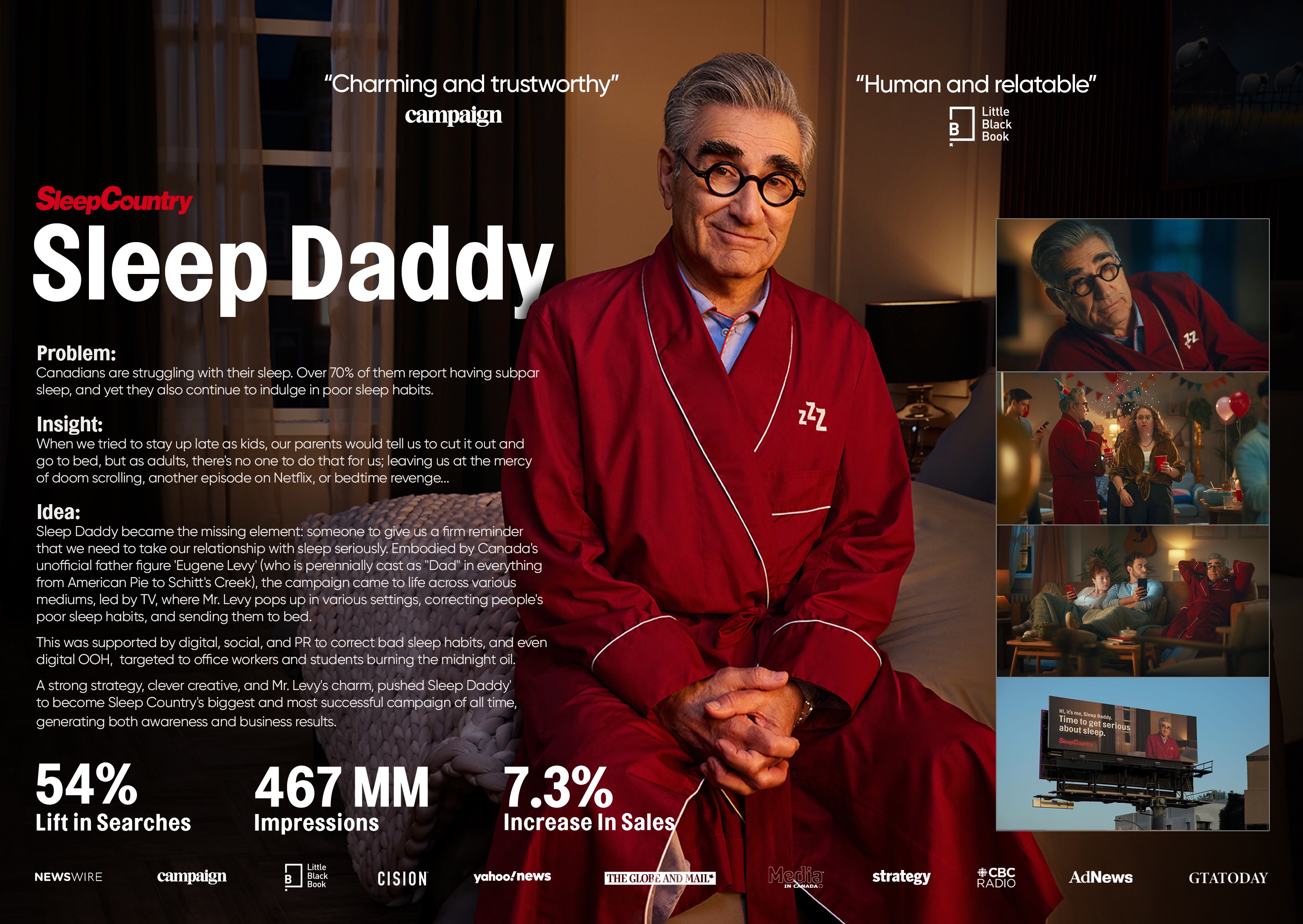
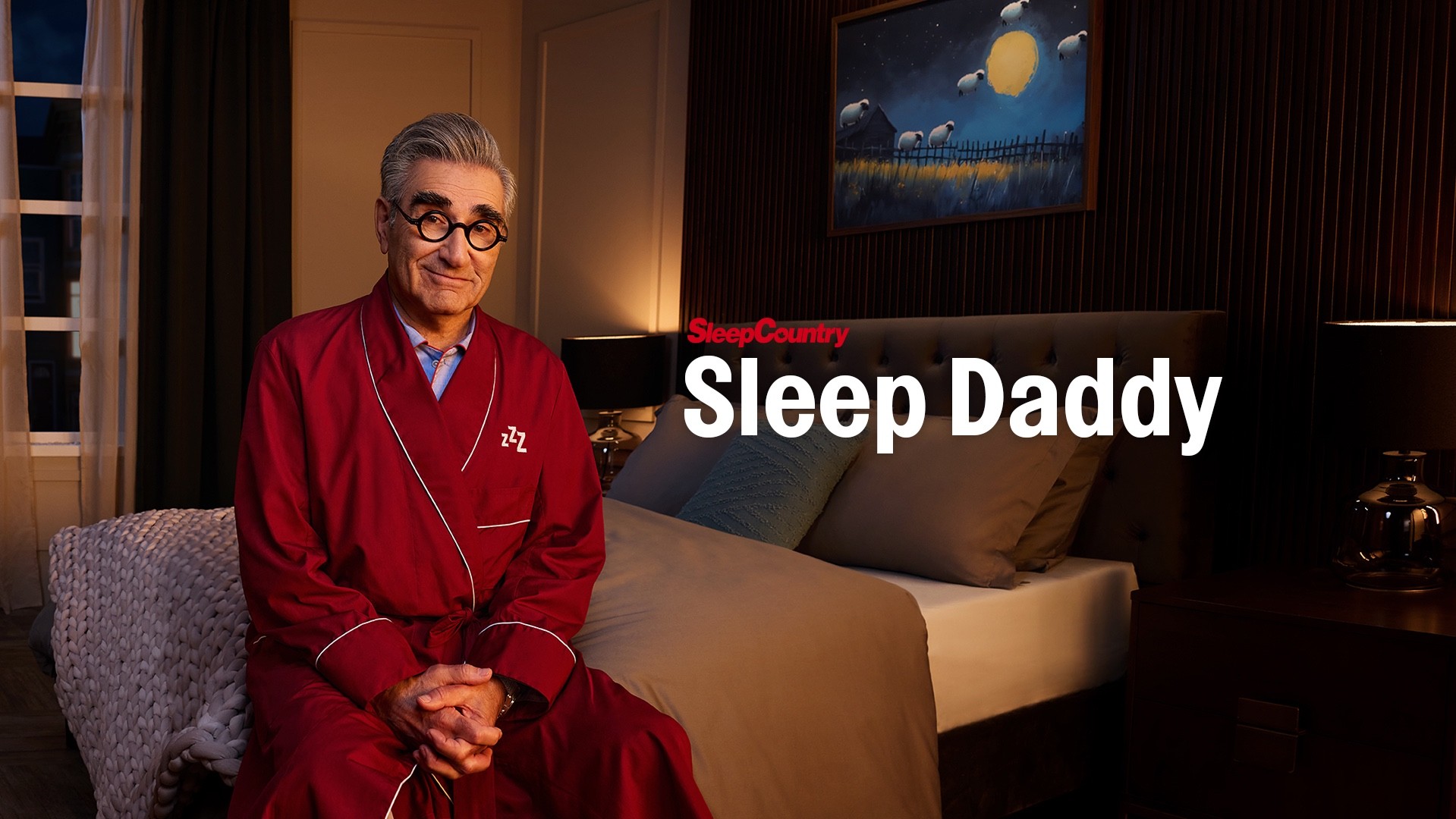
This strategic reset directly led to the birth of a new creative device that was a total departure from the brand’s This strategic reset directly led to the birth of a new creative device that was a total departure from the brand’s previous work: a culturally recognizable authority figure that could intervene in moments of pre-sleep procrastination. “Sleep Daddy” became the embodiment of the strategy itself: an external force that interrupts bad habits and demands better ones. Inspired by parental figures who safeguard their children’s sleep habits, Sleep Daddy reminded Canadians to get serious about their sleep, nudging them away from the late night distractions that had become hallmarks of modern life.
In Quebec, the strategy leaned into the proverb “La nuit porte conseil”– the night brings advice – to inspire “Le Sommeil”: the personification of sleep itself who became the voice of wisdom that Quebecers already attributed to good rest.
Without the shift in focus to behavioural correction, there was no reason for interruption and no space for confrontation.
Because the strategy was to intervene when bad behaviour occurs, the entire creative system was designed around finding those relevant moments. Doomscrolling. Binging TV. Partying. Gaming. The campaign showed up when Canadians were actively choosing to delay sleep, not after the fact.
Mass channels established a shared standard of accountability, while social and digital channels embedded that message into everyday moments of bedtime procrastination. Creative executions were built to interrupt and confront, mirroring the tone and perseverance of a parent telling you to go to bed.
Retail was integrated into this system as a natural extension of the idea. Promotions and events became moments of consequence, with Sleep Daddy and Le Sommeil offering opportunities for audiences to act on their renewed commitment to sleep.
The defining contribution of strategy was not just identifying a new insight, but redefining the creative canvas.
By shifting the problem from the outcomes of poor sleep to the behaviours that cause them, strategy created an entirely new space for creative to operate. Once the focus shifted to behaviour, a confrontational idea that interrupted bad habits wasn’t just possible: it was inevitable.
Real-time intervention replaced retrospective messaging, emotional triggers (light guilt and acknowledgement of choosing to neglect sleep) elevated functional solutions, and the brand adopted a more commanding voice that positioned them as the bridge between intention and action.
This transformation turned strategy into a creative catalyst, not simply informing the work but defining what the work needed to be.
This has fundamentally changed how the brand approaches creativity, moving from simply explaining sleep to actively shaping it.
Credits
PublicisChief Creative Officer: Vinicius Dalvi
Head of Art: Victor Yves
Creative Director: Emmanuel Obayemi, JF Da Sylva
Associate Creative Director (copy): Peter Sreckovic, Antoine Lecler
Associate Creative Director (art): Devon Clarke, Thomas Li Vigni
VP, Brand Director: Eva Marley
Group Account Director: Aniesha Farrington
Account Supervisor: Mahrukh Ali
VP, Strategy: Simon Bédard
Strategy Director: Andrew Markowiak
Head of Broadcast: Pam Portsmouth
Producer: Nicole Andrisevic, Caroline Dion
Post Producer: Heather Selmeyer, Rebecca Burtnik
Editor: Drew Stevenson, Julian Filigno
Assistant Editor: Kimberly Miller-Pryce
Sleep Country
Vice President: Nuno Bamberg
Marketing Director: John Myhal
Marketing Director: Deb Conte, Sandra Dagenais
Marketing Manager: Sam Fusco, Annie Woang
Media Company: Kingstar Media
Production Company: Partners Film
Audio House: Grayson Music
PR Agency: North Strategic
For submission inquiries, please contact strategyawards@brunico.com
.
For partnership inquiries, please contact Neil Ewen at newen@brunico.com.
For partnership inquiries, please contact Neil Ewen at newen@brunico.com.