
2026 Winner
BronzeCause/Public Service
Lifesaving Society (Québec Division)
"Ghost Jackets"
LG2
"Ghost Jackets"
LG2
CASE SUMMARY
Over the past 10 years, more than 600 people have drowned in Quebec.In 70% of cases, victims were not wearing a personal flotation device (PFD) or were wearing it incorrectly.
To drastically change behaviour, the agency created a haunting symbol that couldn’t be ignored: they
transformed authentic lifejackets worn by drowning victims into Ghost Jackets.
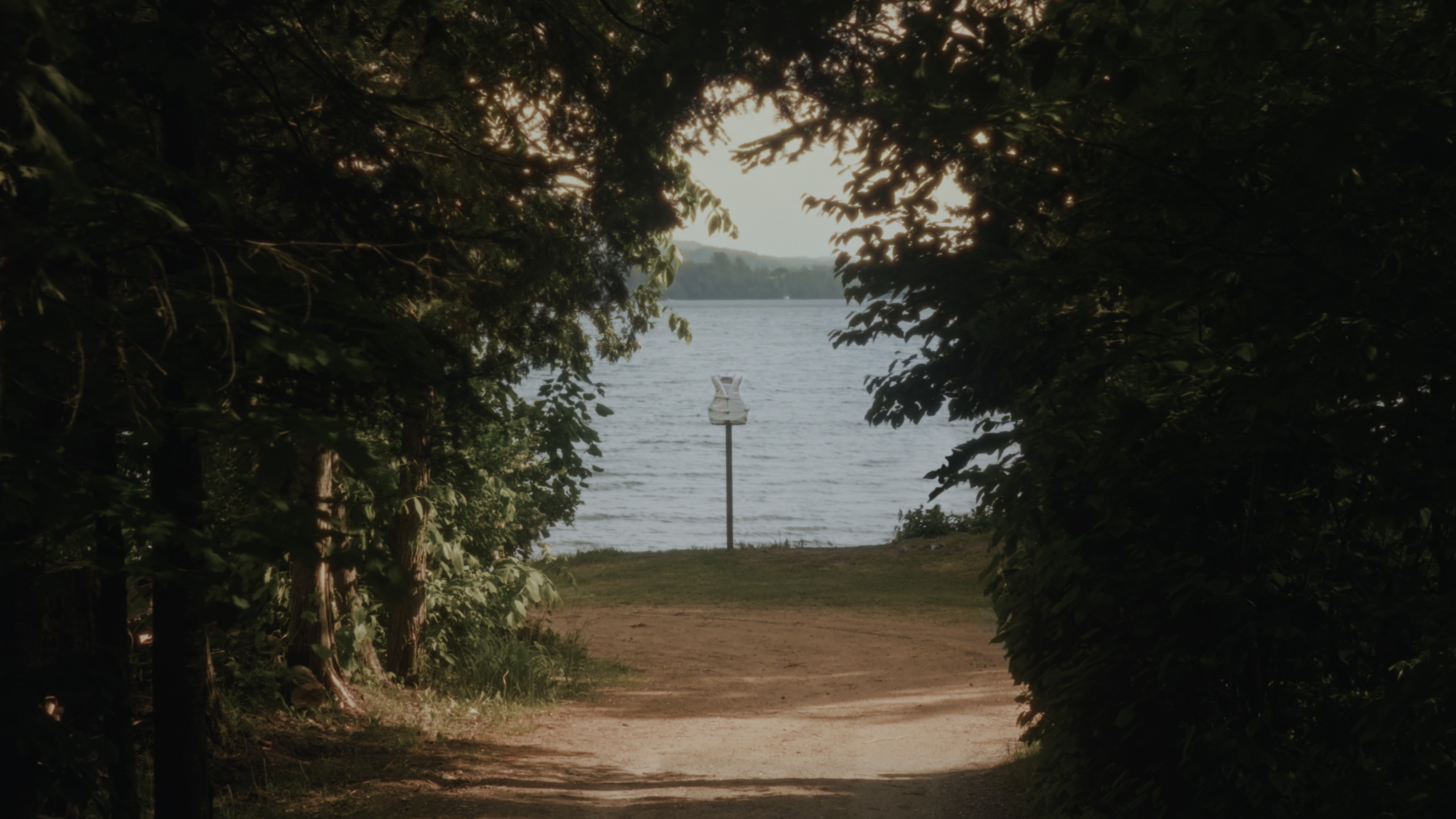
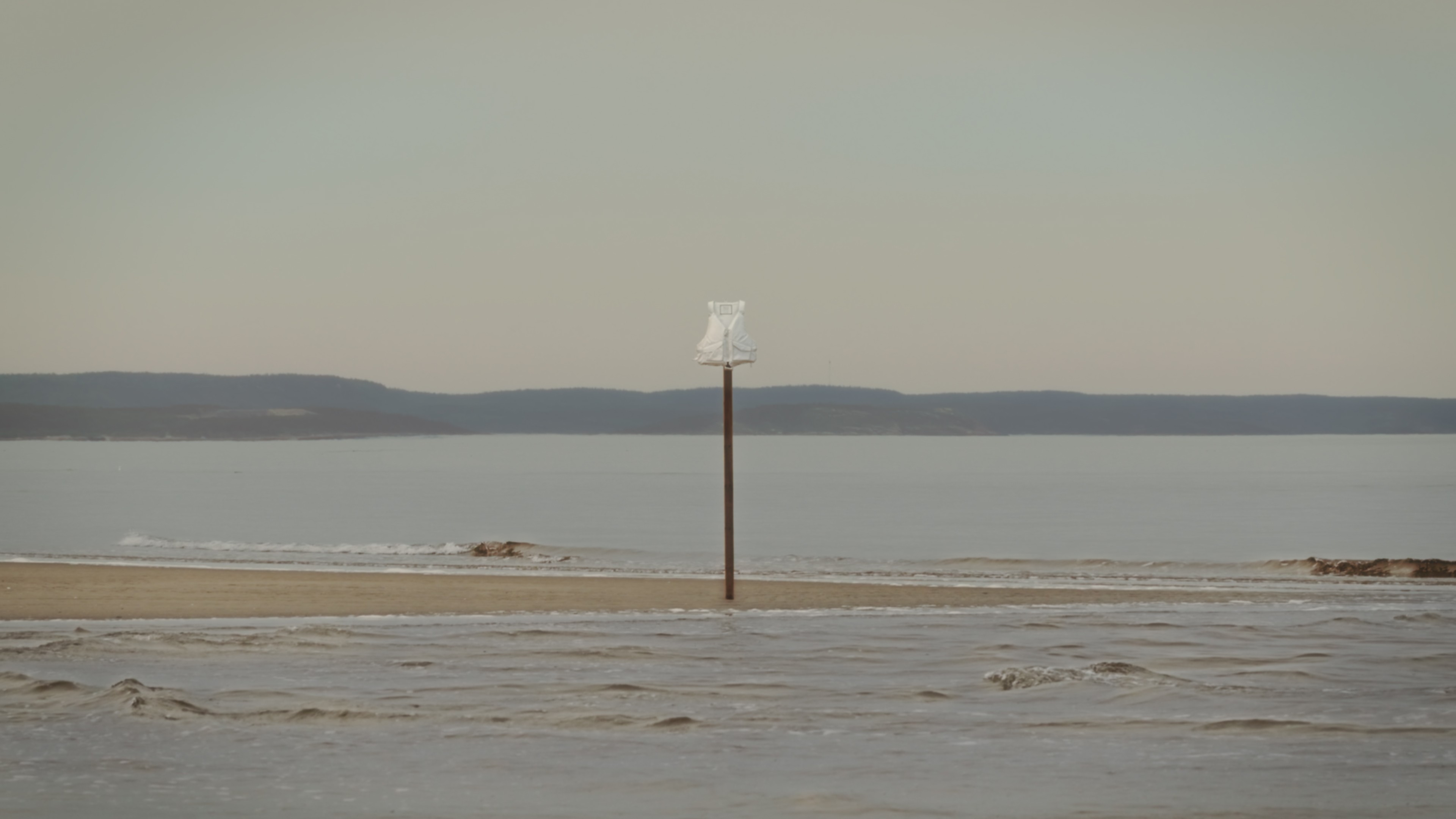
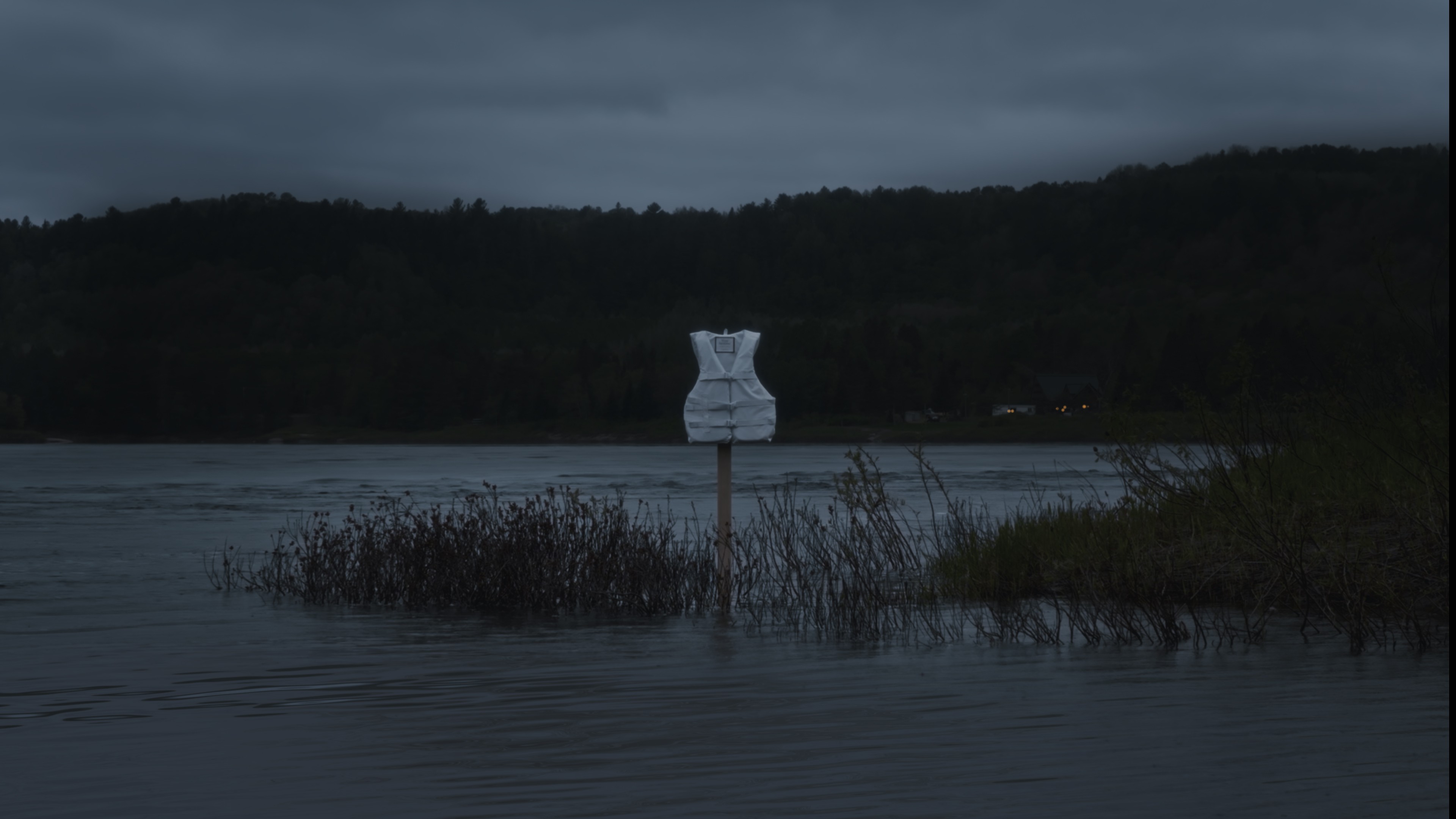
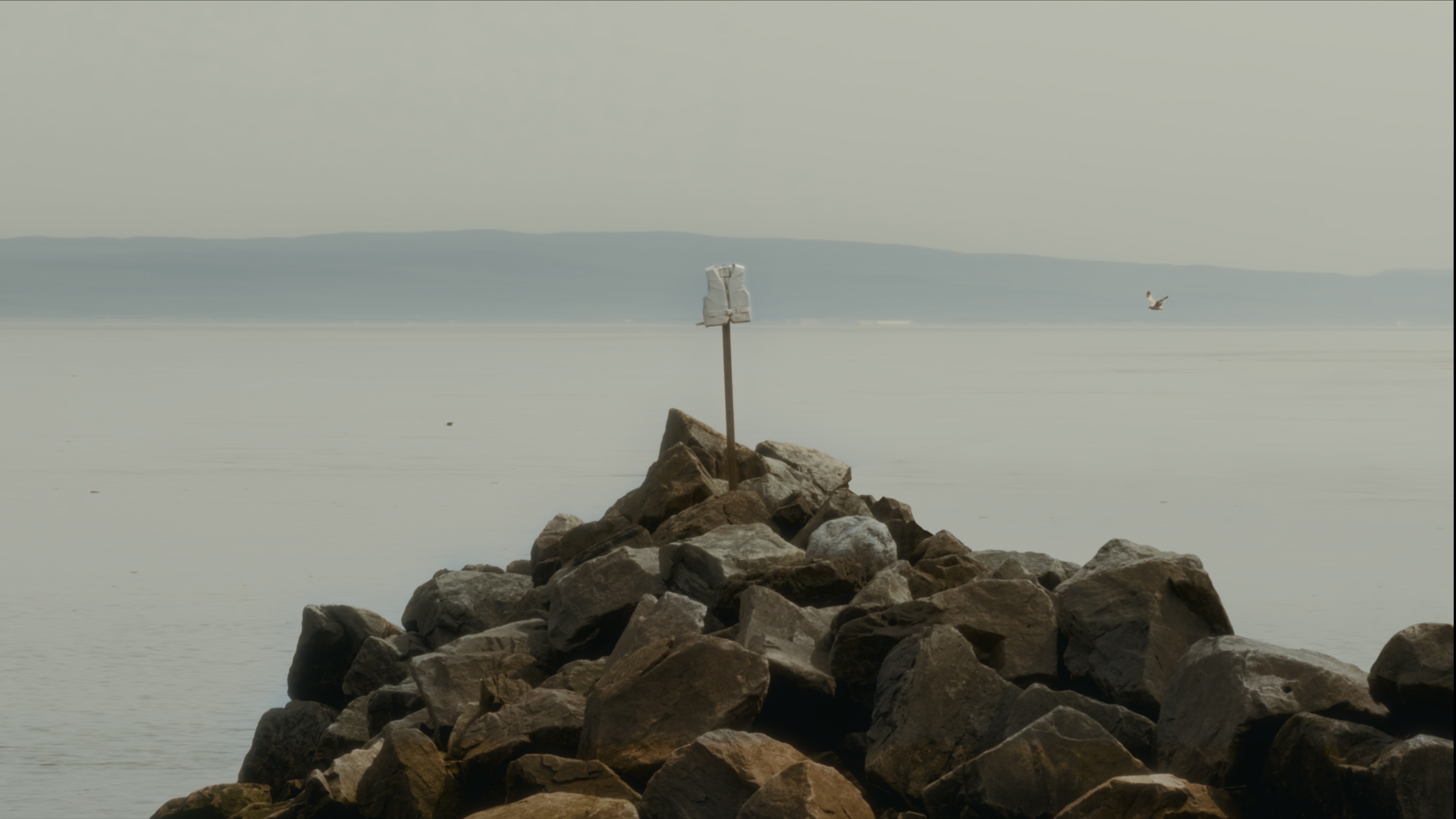
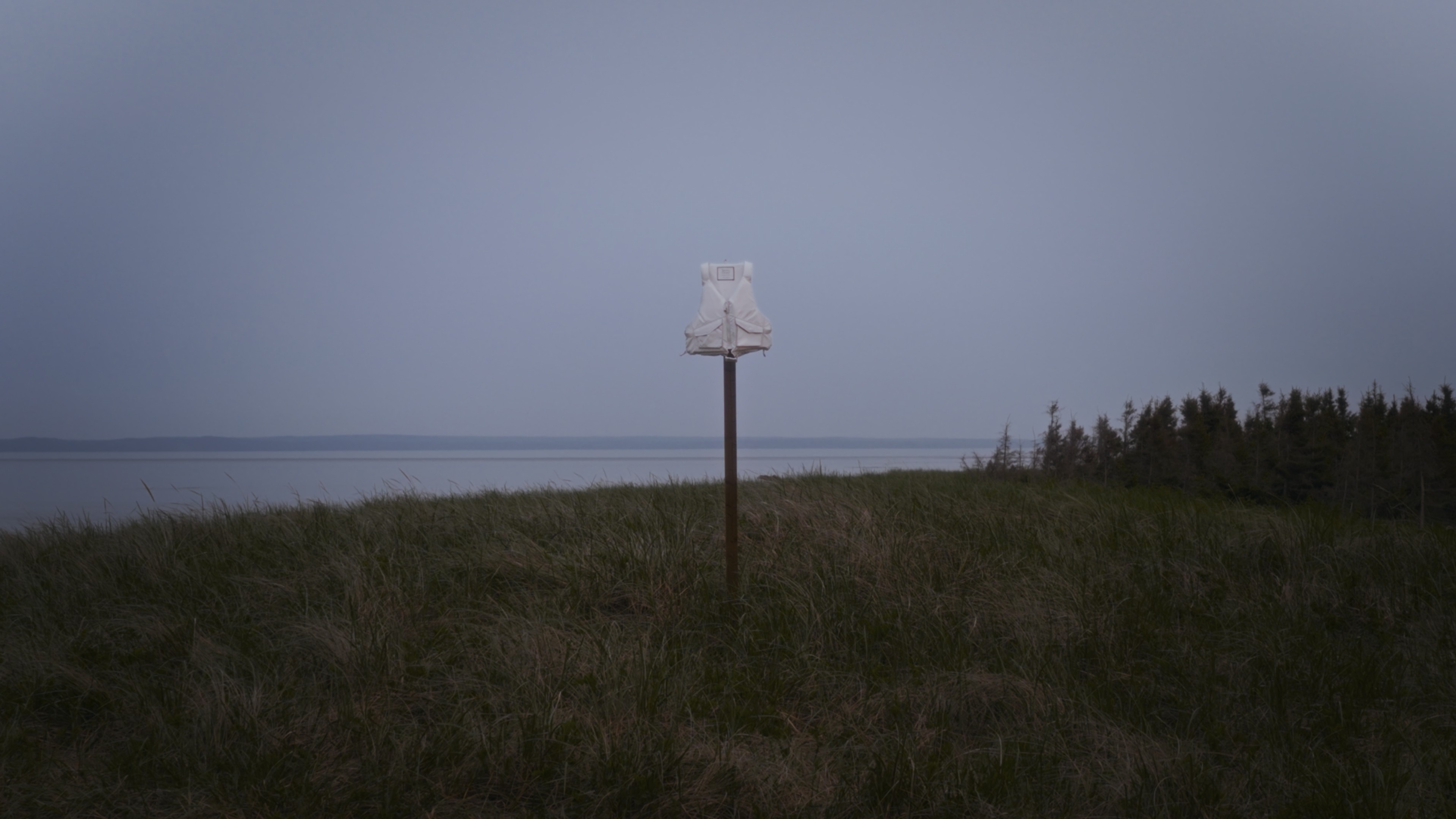
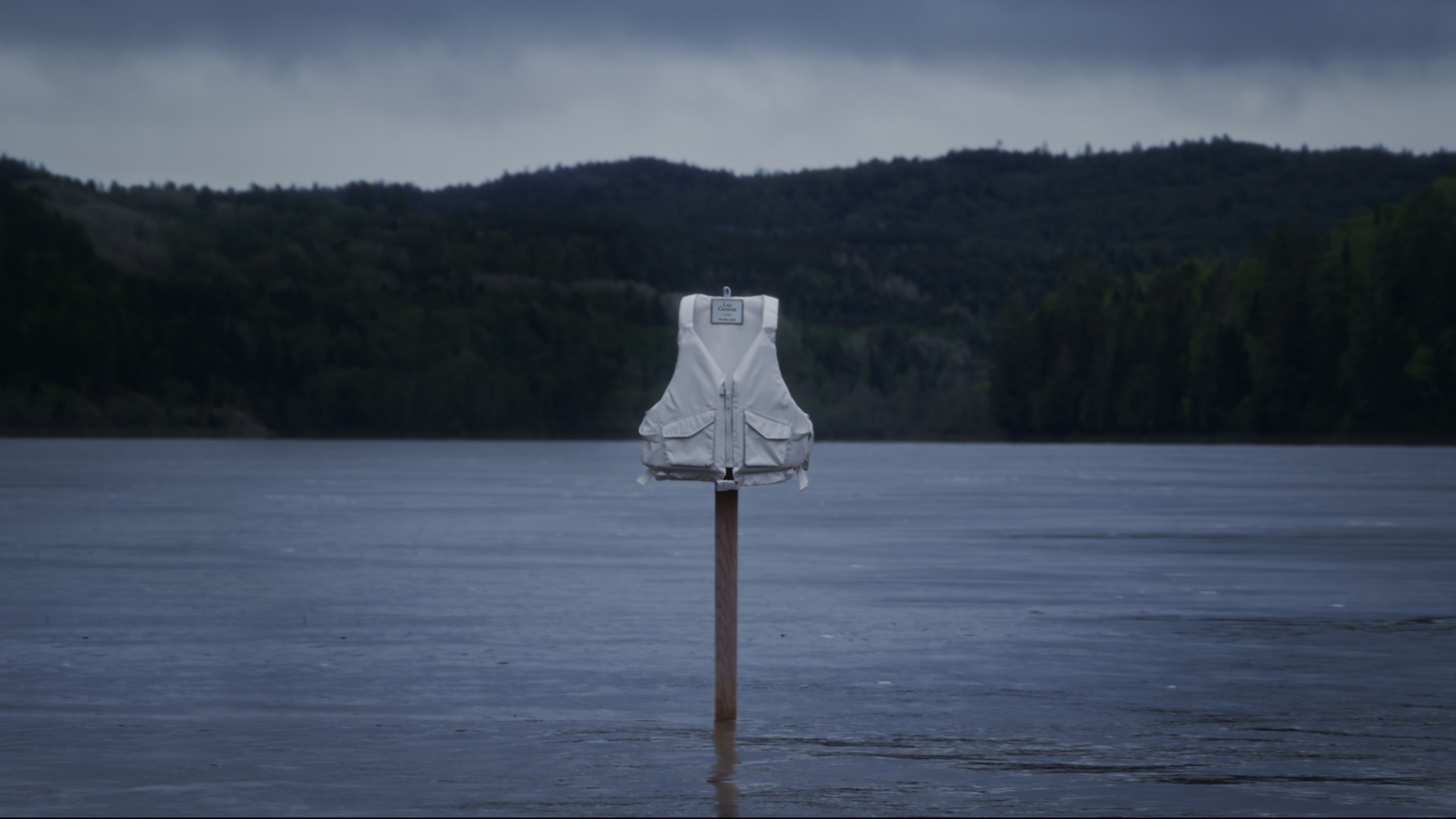
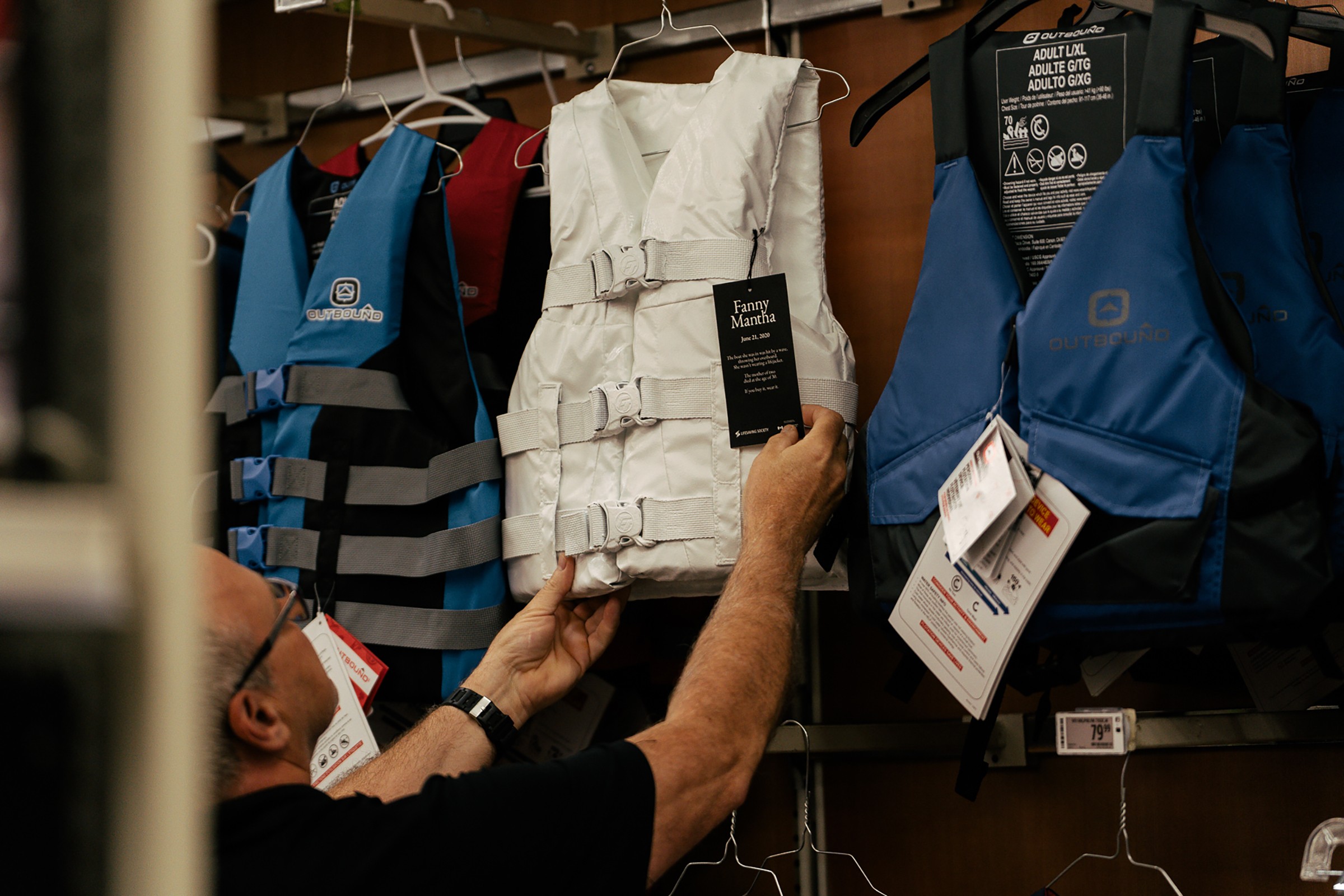
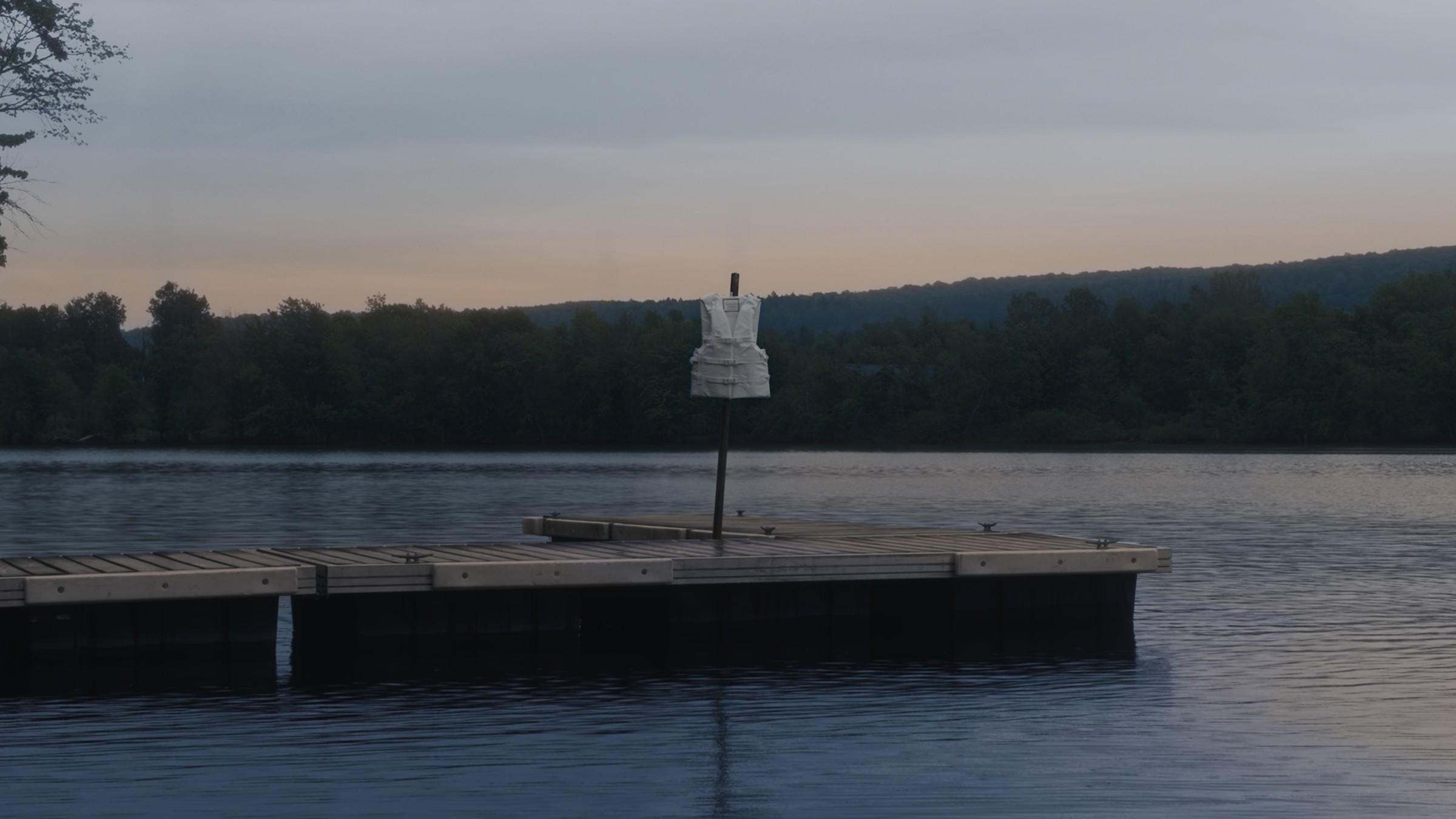
The lifejackets were painted white and installed at the exact sites where lives were lost, with an inscription of the victim’s name and the moment of death. These placements appeared in high-relevance
environments – shorelines, docks and riverbanks – where decisions are made, but no media exists.
Despite years of awareness efforts, a tragic pattern persists: people bring their lifejackets on board but don’t wear them. Traditional “safety first” messages aren’t being heard.
The Lifesaving Society needed to shift behaviour and make boating safety a topic of conversation again, using its role not just to inform, but to prevent future tragedies.
Their objectives? To spark a national conversation and shift intentions.
The sparked conversation by generating massive media coverage of at least 100 articles to put the wearing of personal flotation devices (PFDs) back at the forefront of public discussion. To generate at least $200,000 in media value, ensure a minimum reach of 10 million impressions and generate at least 1 million views of the hero video. And shifted intentions by influencing at least 1 in 2 Quebecers exposed to the campaign to wear their PFD.
Behavioral and ethnological analysis revealed a key insight – boaters assess risk based on what they see.
To change behaviours, it was necessary to make the risk tangible in the immediate environment where negligence occurs.
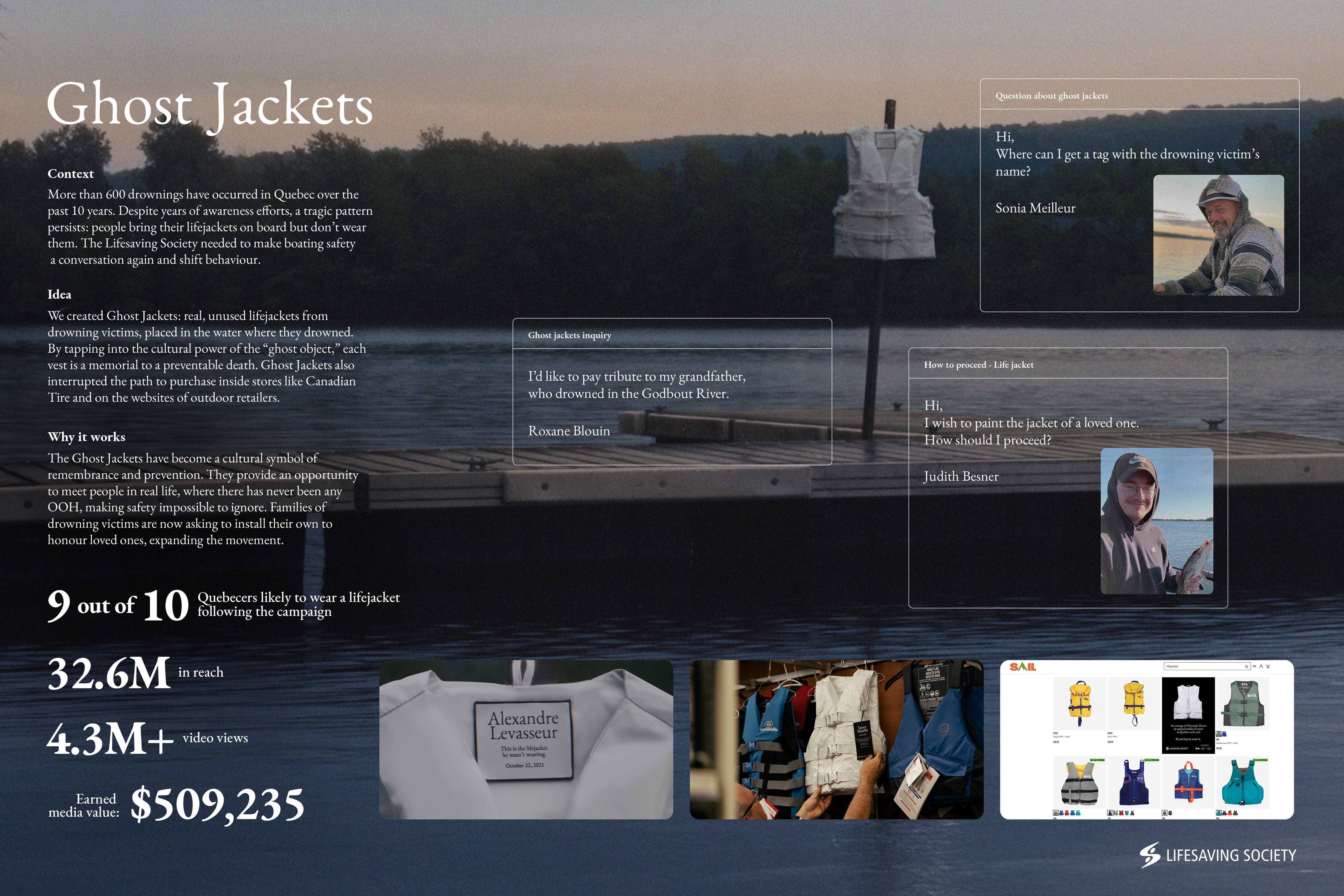
“Ghost Jackets” were created using real, unused lifejackets from drowning victims, placed in the water at the exact sites where lives were lost, with an inscription of the victim’s name and the moment of death.
Painted in stark white, the jackets acted as a disturbing presence in the natural landscape. Drawing on the cultural power of “ghost objects,” each installation became both a tribute to a preventable death and a brutal reminder to passersby: not wearing your lifejacket can kill.
For the landscape to become a communication medium, it was first necessary to map the grief. The agency identified the exact locations of the tragedies, retraced the stories and, above all, established a dialogue of trust with the victims’ families. Because they agreed to integrate their private grief into a public awareness initiative, the campaign transformed into a collective tribute.
White PFDs were installed at actual drowning sites. By occupying locations devoid of any advertising inventory, they literally created a new advertising network, forcing local media and passersby to share these striking images.
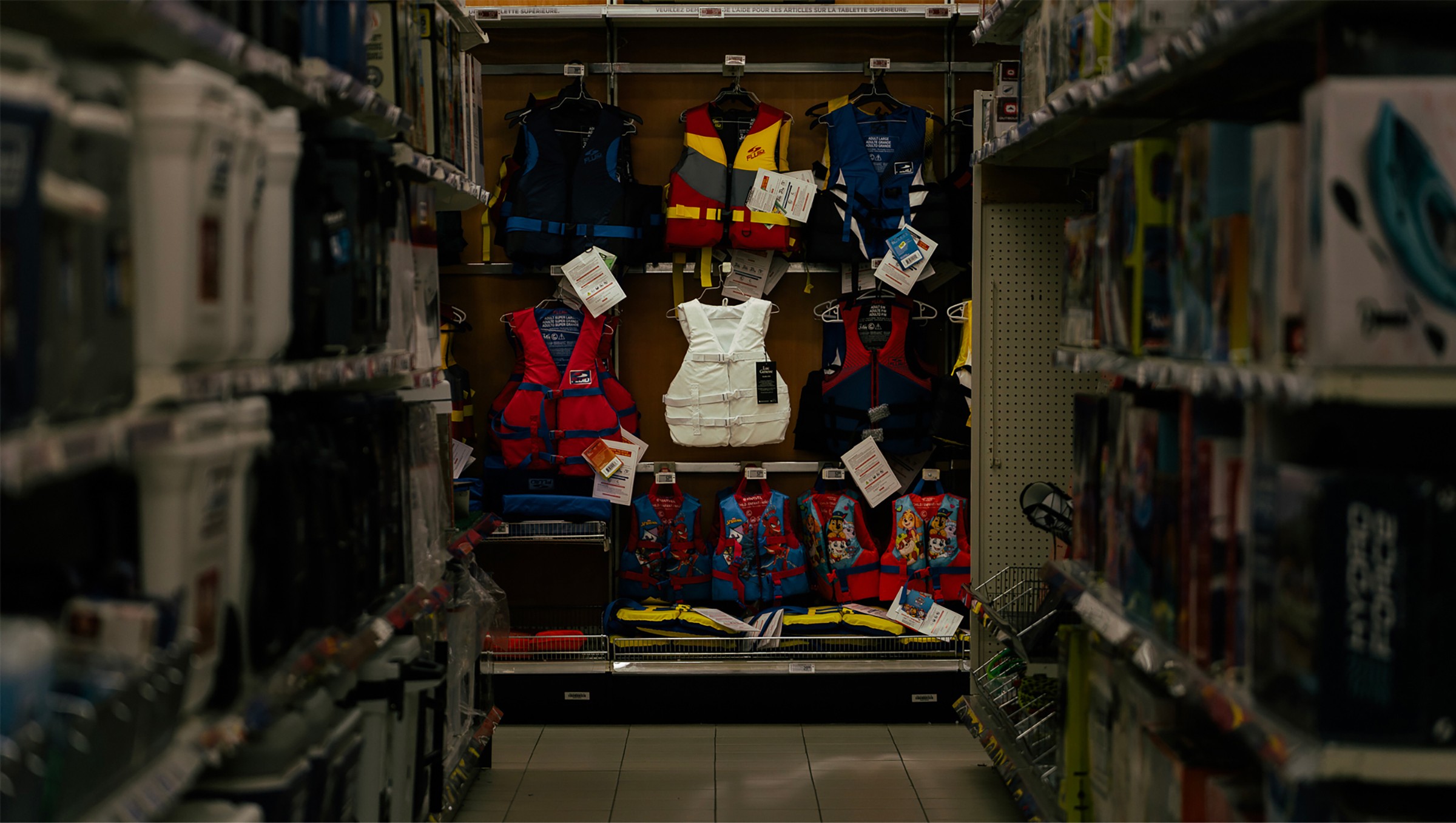
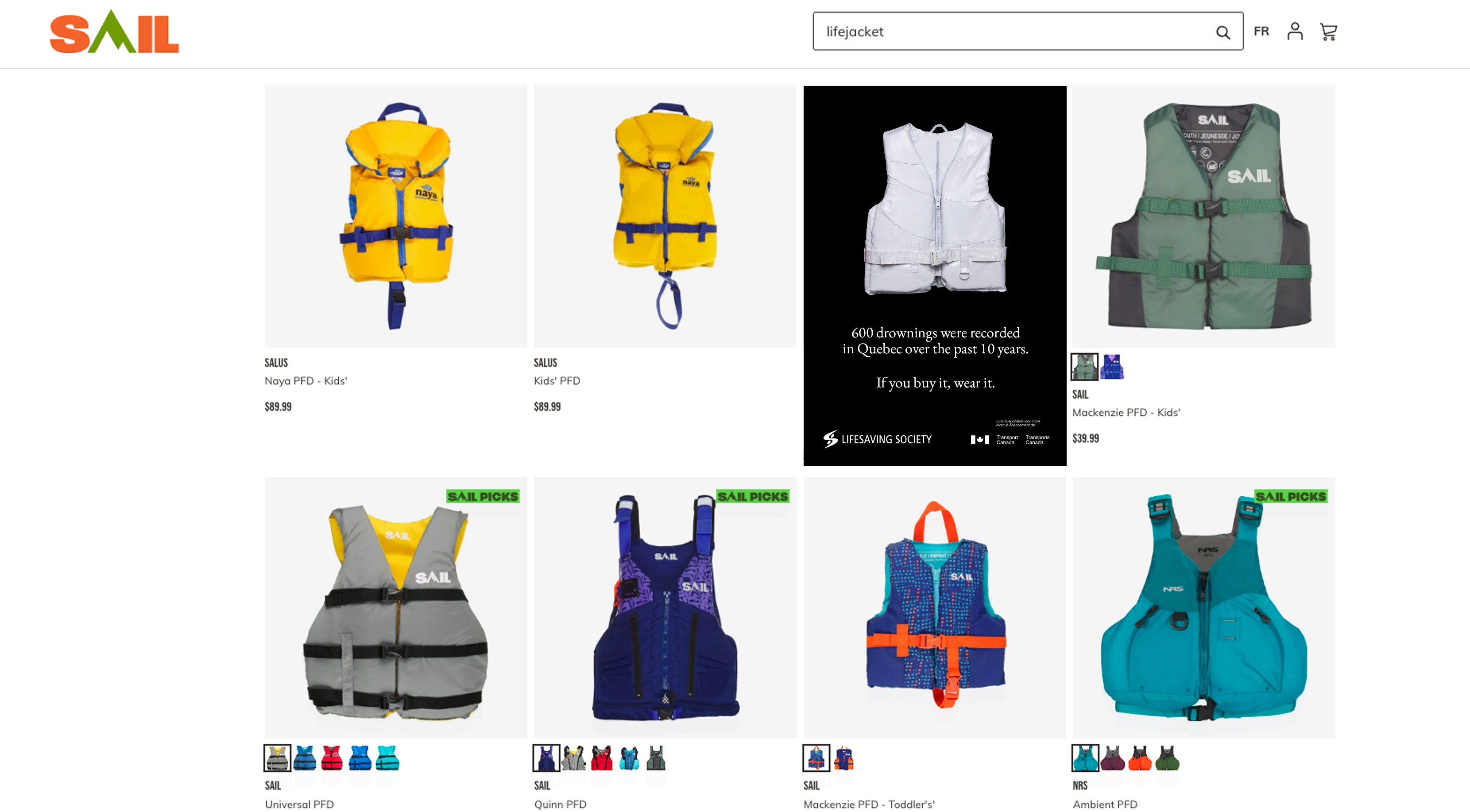
The symbol extended beyond the water into retail environments. “Ghost Jackets” appeared inside stores such as Canadian Tire and alongside purchasable lifejackets on major outdoor retail websites including SAIL, Latulippe and Altitude Sports. Selecting them revealed the safety message.
Each installation was treated as a local news story, generating a wave of public relations that converged into a coordinated provincial movement during National Drowning Prevention Week.
Planning’s most vital contribution was reframing the campaign from a top-down warning into a grassroots social movement. By tapping into the visual vernacular of “ghost objects,” the strategy didn’t just create an ad; it established a new social ritual of remembrance. This ensured the campaign wasn’t a fleeting media moment but a permanent part of the nautical culture, leading families of victims to proactively reach out to join the movement.
The strategy identified that the lifejacket had become “invisible” through over-familiarity. They chose to reuse and reframe this powerful symbol, transforming the very object people were neglecting into a haunting reminder of their own mortality. By using authentic jackets from victims, planning anchored the creative in a radical truth that made the campaign impossible to dismiss as mere advertising. Creating media where none existed.
Strategic planning emphasized the importance of being visible where decisions are made.
“Ghost Jackets” were installed close to the water at actual drowning sites across Quebec, in places with no traditional media presence. Shorelines, docks, and riverbanks became the primary canvas, ensuring the message appeared exactly where safety decisions are made.
The strategy successfully achieved its goal of transforming a silent object into a powerful social symbol, exceeding initial targets through an omnipresent media presence and deep public engagement.
The initiative generated 494 media placements, an exceptional volume that propelled boating safety to the top of the media agenda across national newscasts, service programs and regional press.
The conversation generated $509,000 in media value , delivering a remarkable return on investment.
Reach climbed to 32.6 million impressions, demonstrating that the message extended well beyond its usual circles to reach the entire Quebec population.
Organic efforts led to 4.3 million video views, reflecting a level of engagement that highlights the viral power and emotional resonance of Alexandre’s story. 9 out of 10 respondents exposed to the campaign said they were more likely to wear their PFD, proving that the conversation directly influenced behavioural intent.
“Ghost Jackets” have become a powerful symbol within Quebec’s boating community. The project ceased to be just a campaign when victims’ families independently reached out to the Lifesaving Society to request the installation of their own “Ghost Jacket”.
This grassroots adoption proves that the initiative transcended advertising to become a true social ritual of prevention.
Credits
CREATIVE AGENCY: LG2CLIENT: Lifesaving Society (Quebec Division)
PRODUCTION COMPANY: Gorditos
POST-PRODUCTION COMPANY: Shed
SOUND STUDIO: Circonflex
[Individual Credits - Agency - LG2]
EXECUTIVE CREATIVE DIRECTION: Geneviève Langlois
CREATIVE DIRECTION: Frédéric Tremblay
COPYWRITING: Jean-Frédéric Barrette, Cédric Audet
ART DIRECTION: Miriam Rondeau
DESIGN: Maxime Jenniss, Mathilde Bonin-Leblanc
ADAPTATION: Krissi Campbell
INTERVIEW: Catherine Foisy
RESEARCH: Andrée Giraldeau
CLIENT SERVICES: Carl Milette, Maude Lavigne
PROJECT MANAGEMENT, PRODUCTION: Mélanie Thérien
AGENCY PRODUCTION: Valéry Lewis, Lina Piché
MOTION DESIGN: Antoine Hallé
EDITING: Carl Munger, Alicia Barbeau
PHOTOGRAPHY: Marie-Emmanuelle Laurin
CHIEF CREATIVE OFFICERS: Nicolas Baldovini, Josh Stein, Luc Du Sault
CHIEF STRATEGY OFFICER: Sophie-Annick Vallée
VICE-PRESIDENT, STRATEGY: Stéfanie Forcier
VICE-PRESIDENT, ACCOUNT SERVICES: Karine Payette
[PRODUCTION COMPANY: Gorditos]
PRODUCER: Saskia von Lignau
DIRECTOR: Raphaël Ouellet, Justin Desjardins
DOP: Raphaël Ouellet
EDITING: Alexandre Richard
[POST-PRODUCTION COMPANY: Shed]
COLORIZATION: Lany-Jade Mondou
[SOUND STUDIO: Circonflex]
ENGINEERING: Jonathan Doyon, Craig Murdock
MUSIC: Paul-Étienne Côté, François-Pierre Lue
[CLIENT: Lifesaving Society (Quebec division)]
EXECUTIVE DIRECTOR: Raynald Hawkins
HEAD OF COMMUNICATIONS AND PUBLIC RELATIONS: Anne-Marie Francoeur
HEAD OF MARKETING AND PARTNERSHIPS: Cynthia Collerette
For submission inquiries, please contact strategyawards@brunico.com
.
For partnership inquiries, please contact Neil Ewen at newen@brunico.com.
For partnership inquiries, please contact Neil Ewen at newen@brunico.com.