
2026 Winner
GRAND PRIX
GoldNiche Strategy
Gilead Sciences
"Animal Attraction"
The Local Collective
"Animal Attraction"
The Local Collective
CASE SUMMARY
In a category defined by caution, Descovy made HIV prevention culturally confident.Descovy saw an opportunity to do something fundamentally different. Instead of translating prevention into simplified, mass-friendly language, the brand chose to speak directly in the cultural shorthand of its audience. By tapping into a widely understood system of identity within the gay community and transforming it into a bold visual world, Descovy embedded itself inside the dynamics of attraction, intimacy, and connection.
Launched during Toronto Pride, the campaign didn’t explain HIV prevention. It made it feel like part of the culture itself.
The result was a step change in performance and perception, delivering 85% of annual awareness targets in just two months, while dramatically outperforming category benchmarks across efficiency, engagement, and search.
Pre-exposure prophylaxis, or PrEP, is one of the most effective tools available to prevent HIV transmission. Descovy is a leading option, widely used among those at risk of sexually acquired HIV, particularly gay and bisexual men and transgender women. Yet despite the progress in science, the category continues to communicate in the same way it always has.
Pharmaceutical advertising in this space is shaped by regulation, caution, and a desire to avoid missteps. The result is work that is technically correct but emotionally distant. Even in moments like Pride, when brands attempt to show solidarity, the tone often feels observational rather than participatory. Campaigns acknowledge the community, but rarely feel like they come from within it.
The modern reality of HIV prevention exists because of this community. Gay men, in particular, have driven one of the most significant public health turnarounds in modern history through relentless advocacy, education, and cultural openness. Long before brands entered the conversation, the community built the awareness, language, and behaviours that made prevention effective.
This was not a moment for a prescription message. It was a moment to show up with the same level of cultural fluency, respect, and participation that the community itself has demonstrated for decades. Especially during Pride, when visibility is high but authenticity is often low, the risk was not saying the wrong thing. It was saying something that felt external, by a category still cautious around the realities of gay intimacy.
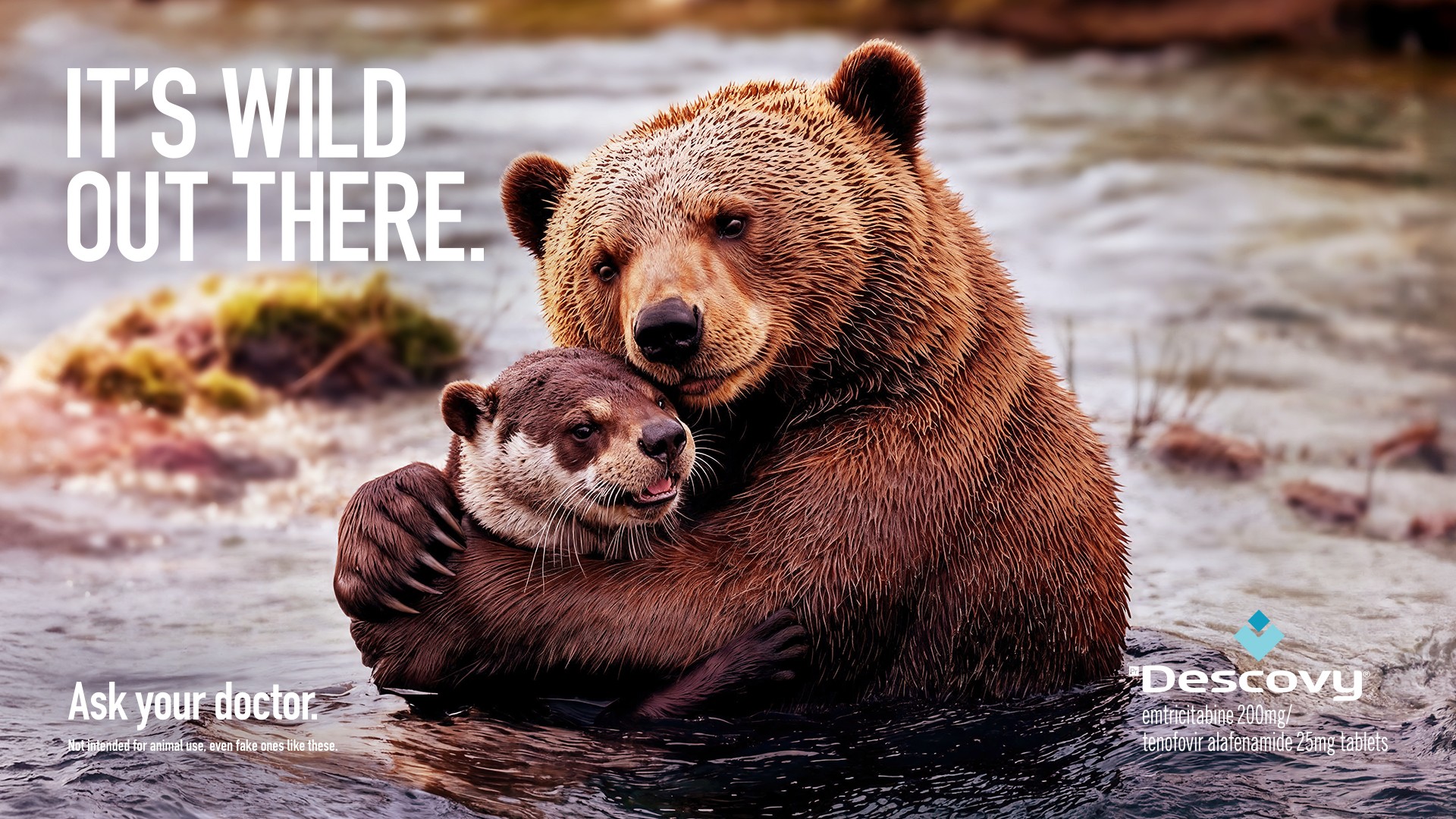
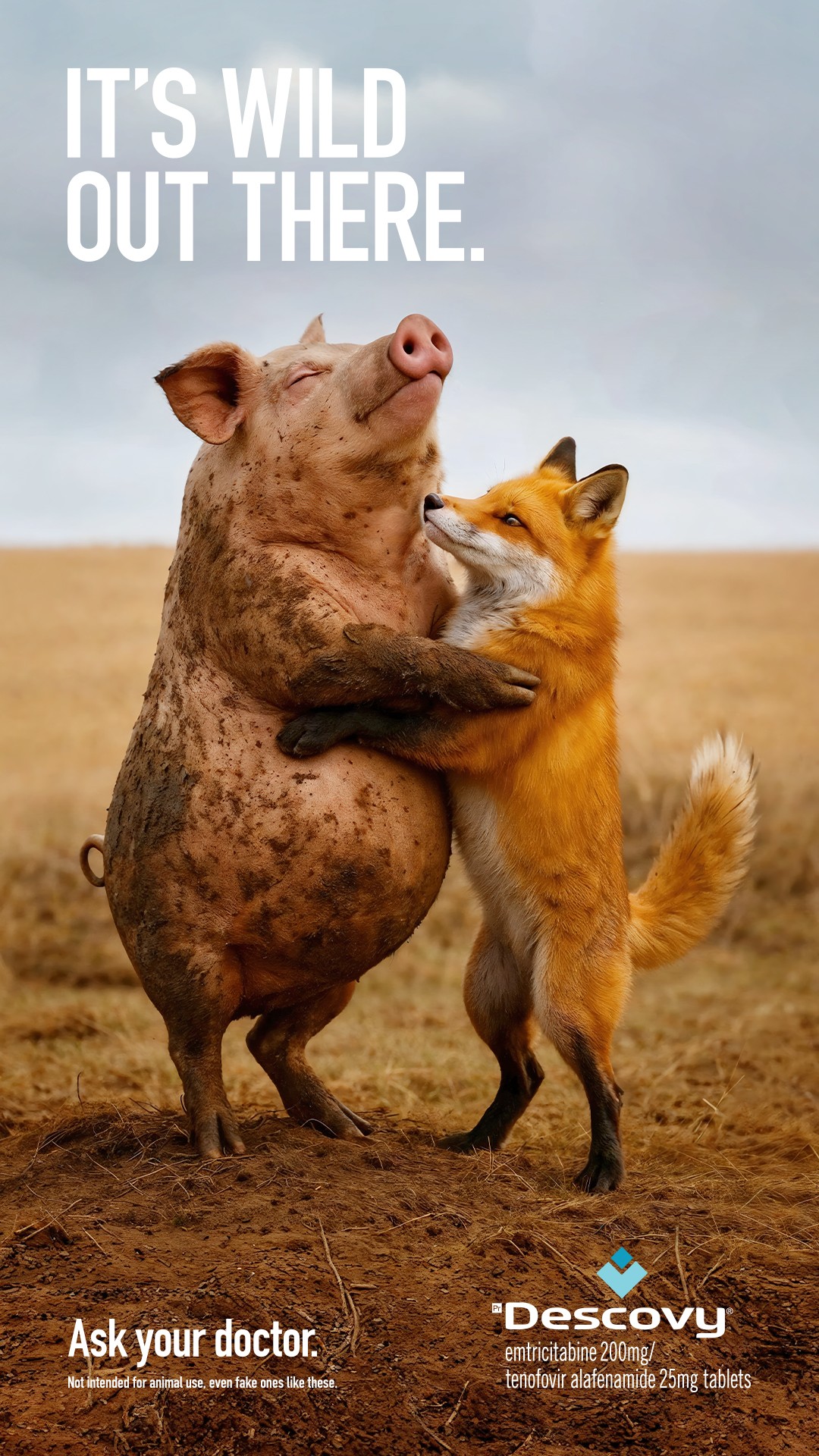
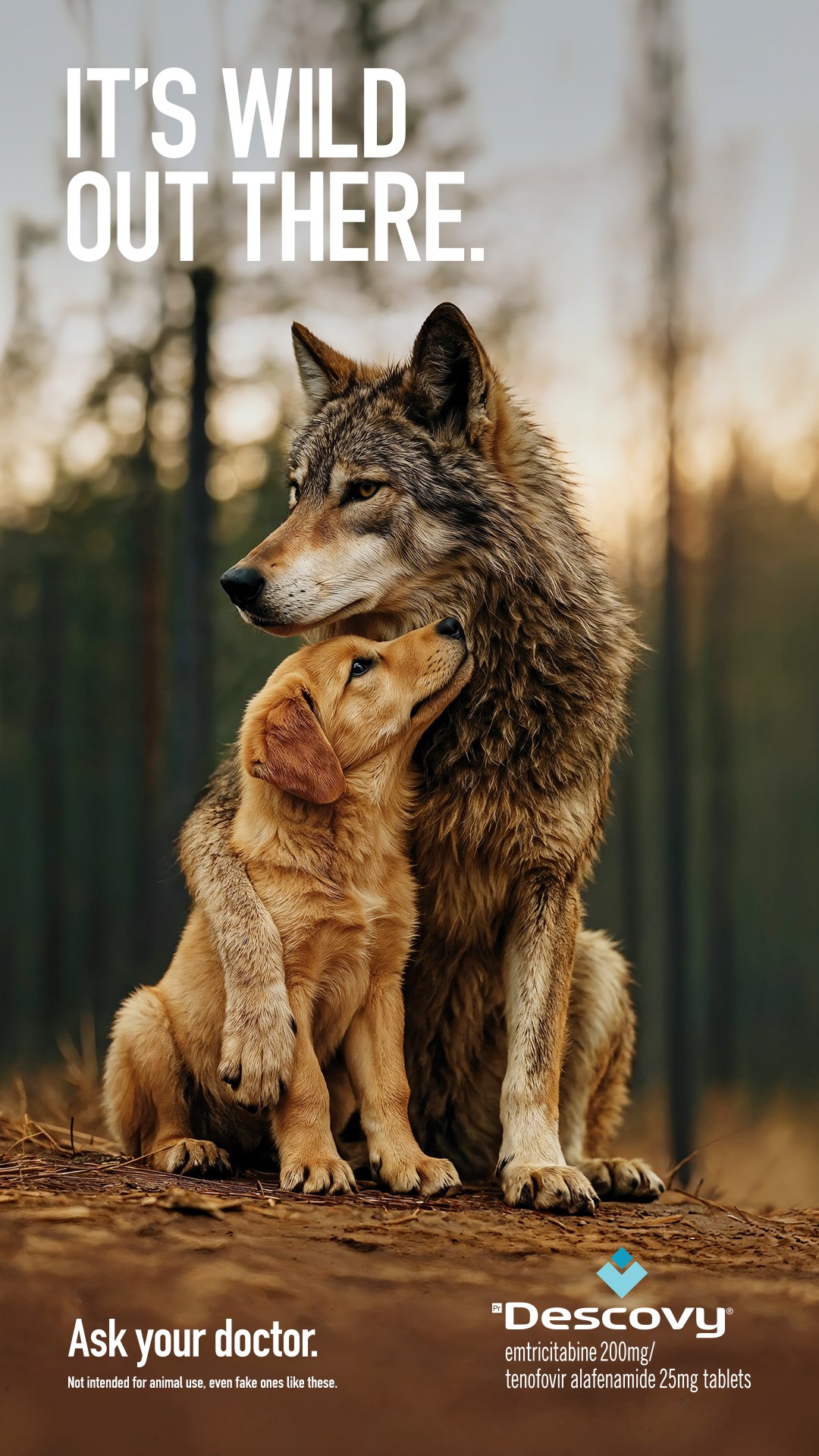
Within gay culture, animal archetypes are used as a form of shorthand to describe identity, attraction, and sexual energy. Bears, otters, pups, wolves, foxes, pigs. These are not superficial labels, they are a shared vocabulary that shapes how people see themselves and each other.
Rather than translating HIV prevention into universal language, Descovy chose to move in the opposite direction. It would speak in a way that privileged the audience rather than explaining it. The goal was not to make the message accessible to everyone, but to make it feel authentic to the people who mattered most.
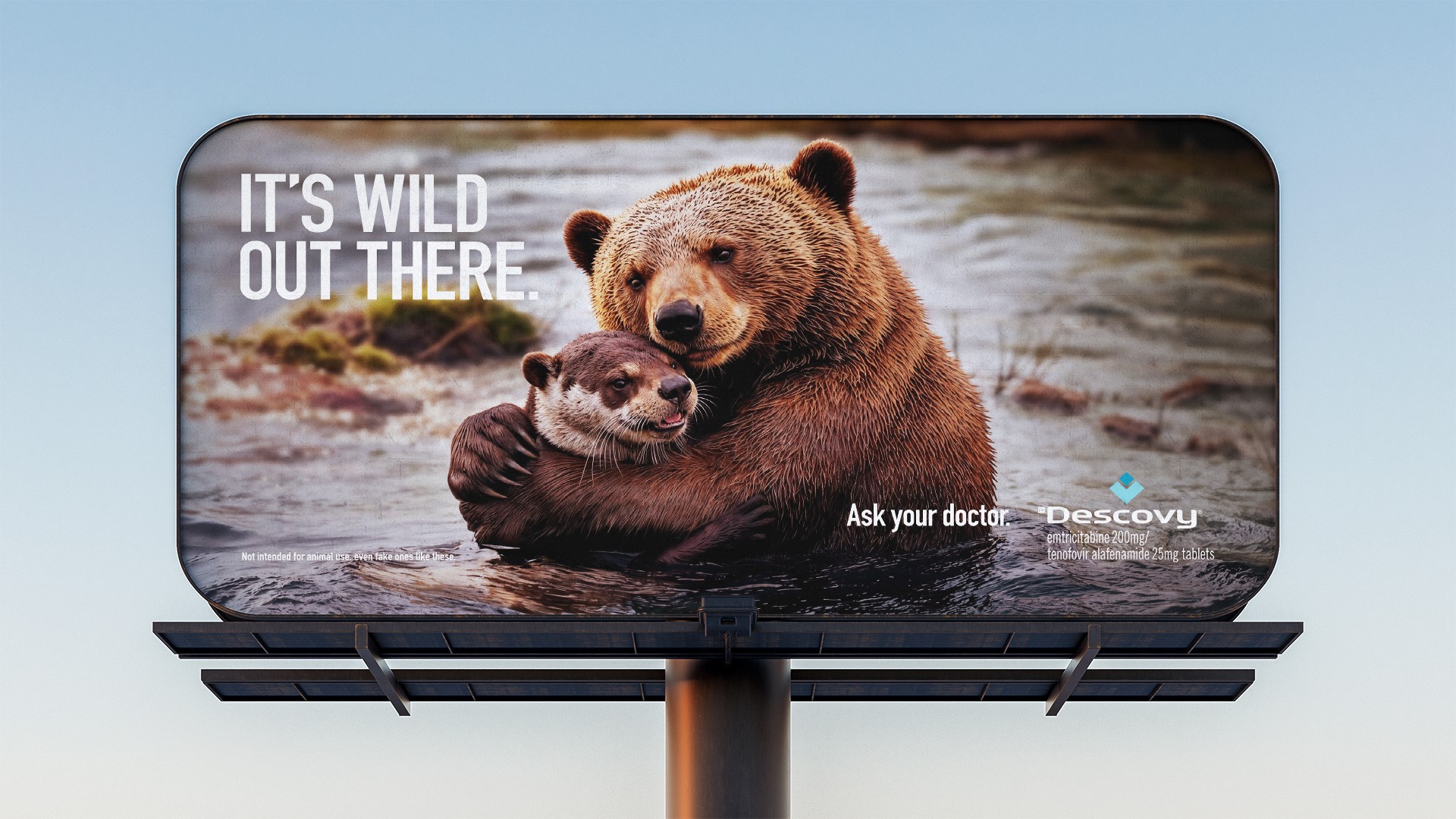
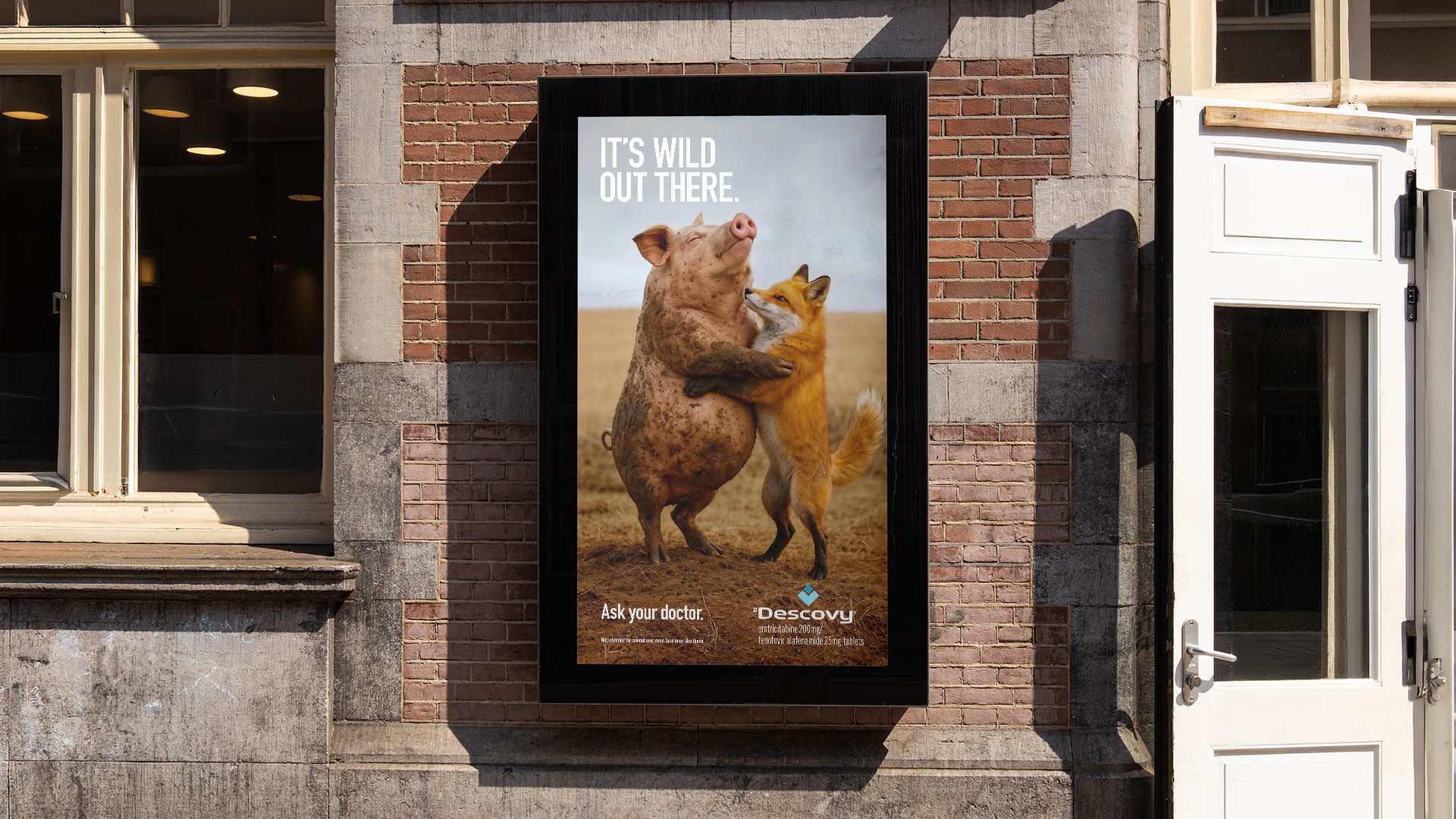
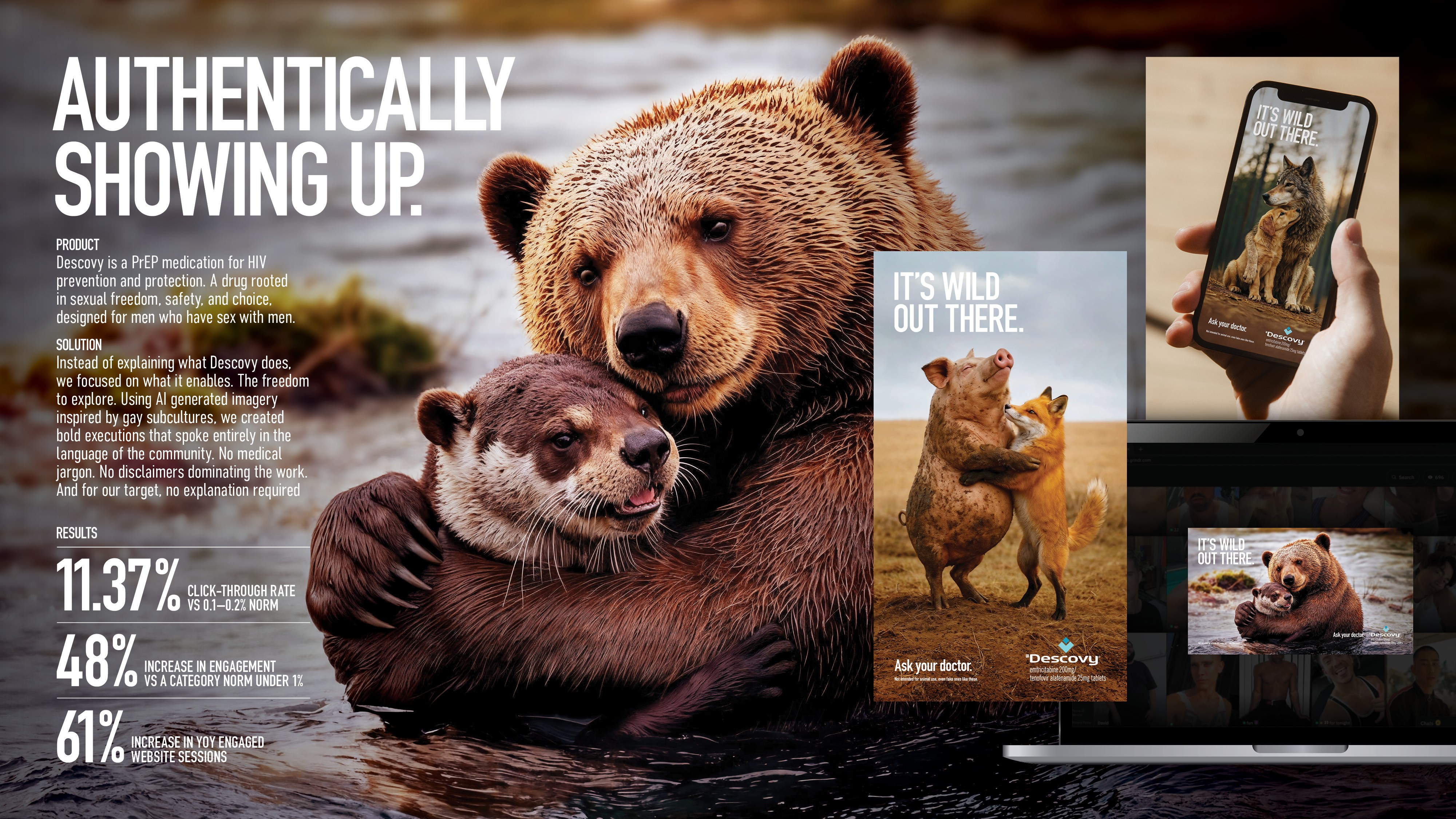
The campaign brought these identity archetypes to life as bold, surreal visual characters. Not literal animals, but expressive, stylized forms that captured the emotional truth of each identity. Bears embraced otters. Wolves protected pups. Foxes flirted with pigs. Each interaction reflected the real dynamics of desire and connection within the community.
These visuals were not didactic. They did not explain PrEP or demonstrate product usage. Instead, they operated as cultural shorthand. If you understood the references, the work felt personal and affirming. If you did not, it still read as joyful, confident, and unmistakably about human connection.
Traditional photography could not capture the nuance of these identities without becoming either overly literal or unintentionally reductive. Instead, the campaign used a hybrid of AI generation and illustration to create a distinct visual world. AI enabled the creation of fluid, surreal forms that moved beyond realism, while illustration allowed the team to shape tone, warmth, and intimacy with precision.
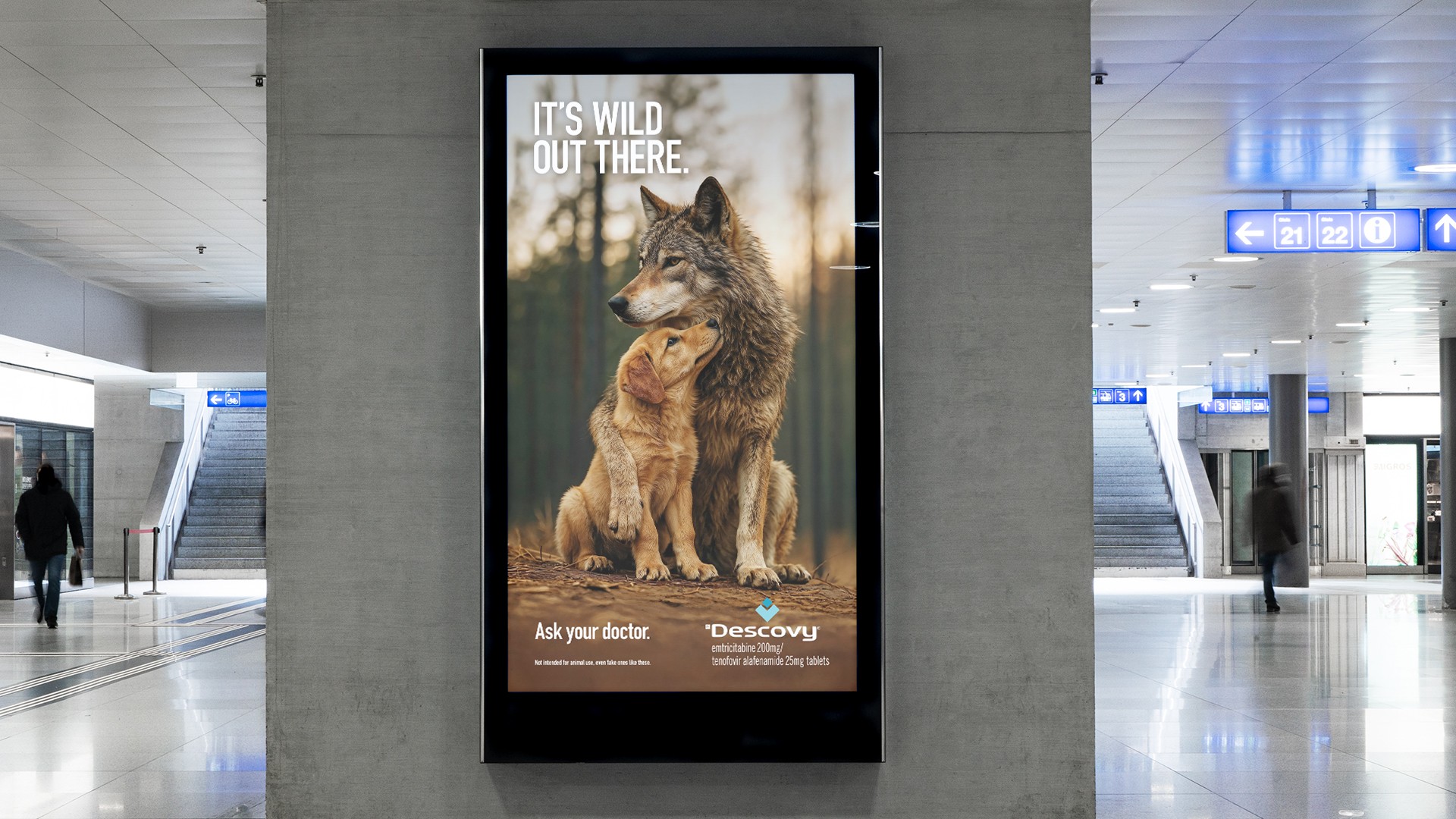
Descovy showed up across high-impact digital out of home, social and digital media, and online video.
Toronto Pride is a peak expression of identity, connection, and play. It is a time when people are more social, more expressive, and more open to exploring attraction and intimacy. Platforms like Grindr see increased activity as people connect in real time, navigating chemistry, desire, and possibility.
Rather than interrupting the moment with a clinical message, the campaign reflected it. By using the same coded language and dynamics people use to express attraction, the work felt native to the experience of Pride itself.
This community has spent decades building awareness, advocacy, and openness around sexual health. PrEP is not a new concept to them. The decision is not whether to protect themselves, but how. Descovy met them at that point of choice.
The impact was immediate and measurable.
In just two months, the campaign delivered 43.2 million impressions, reaching 85% of Descovy’s annual awareness target within a single Pride window. It achieved a CPM of $2.65, dramatically outperforming the pharmaceutical benchmark of $11.48 and delivering awareness at nearly 4 times the efficiency.
The campaign also drove strong downstream engagement. Paid search clicks increased by 97% month over month, while cost per click dropped to $1.37 compared to a category average of $6.35. Website engaged sessions increased 61% year over year, and overall engagement rate grew by 48%.
Ultimately, this work demonstrates that in highly regulated categories, differentiation does not come from pushing harder on information. It comes from understanding the human context in which that information lives.
Credits
Advertising Agency: The Local Collective, Toronto, CanadaMatt Litzinger, Founder, Chief Creative Officer
Kaitlin Doherty, Founder, President
Josh Day, Executive Creative Director, Advertising
Caitlin Keeley, Executive Creative Director, Advertising
Omar Morson, Executive Creative Director - Design
Vallerie, Traitsis Account Director
Shea McNeely, Account Executive
Andrew Schulze, Producer
Mike Carter Studios, Illustration Studio
Happyboy Studio, AI Artist
For submission inquiries, please contact strategyawards@brunico.com
.
For partnership inquiries, please contact Neil Ewen at newen@brunico.com.
For partnership inquiries, please contact Neil Ewen at newen@brunico.com.